


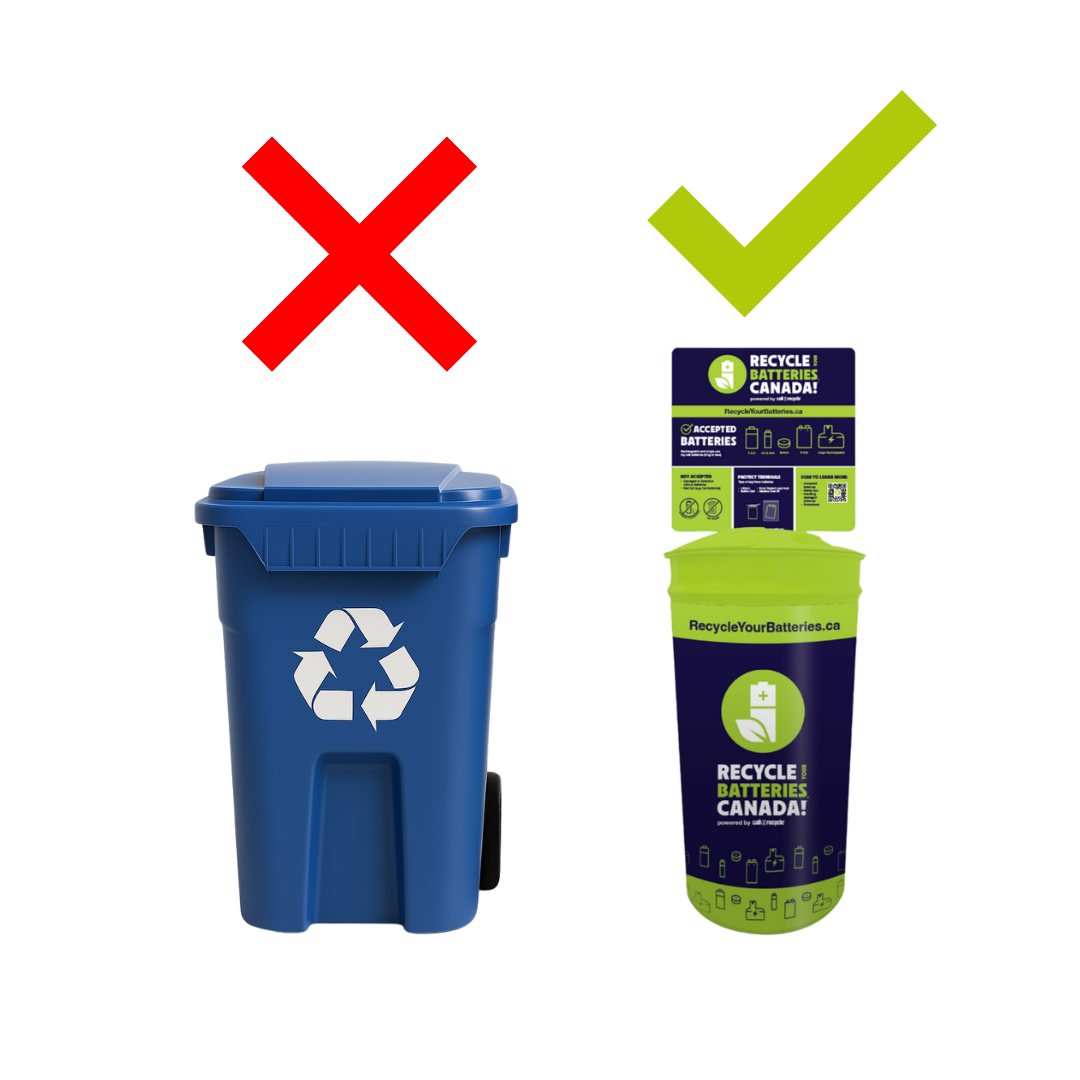
Batteries should NEVER be placed into the trash or your curbside recycling, as they can be damaged in trucks, and potentially cause fires, endangering staff at recycling facilities.
The chemicals in batteries can also leak out and contaminate your recyclables, making them unable to be recycled. A single battery can ruin an entire batch of materials!
Batteries need to be recycled properly, at specifically designated battery recycling locations. The good news is that with more than 15,000 convenient drop-off locations across Canada, it’s easy to recycle! Just Collect, Protect, Drop Off!
WHY IT’S IMPORTANT:
- Batteries can cause sparks if they come into contact with debris.
- Lithium batteries can be damaged in trucks and cause fires at recycling processing centres.
- Batteries can overheat if left outdoors, increasing the risk of fire.
- Certain chemicals in the batteries could harm the environment if they end up in landfills.
- If placed in curbside recycling, certain chemicals in batteries can contaminate paper and plastic items, preventing them from being recycled.
- Some landfills in Canada are reaching their capacity. Recycling your batteries properly helps reduce materials sent to landfill.
COLLECT, PROTECT, DROP OFF

1. COLLECT: Collect your used batteries in a non-metal container.

2. PROTECT: Cover the terminals of rechargeable, lithium and alkaline batteries over 9V with electrical tape to prevent sparks.

3. DROP OFF: Drop off your used batteries every three months at one of our nearly 15,000 convenient locations.
You can find them at municipal depots, libraries, and major retailers.
For more information about what can be included in your curbside recycling, please visit Circular Materials.
This message is brought to you by Recycle Your Batteries, Canada! in collaboration with Circular Materials. Circular Materials is a national not-for-profit organization that builds efficient and effective recycling systems across Canada.